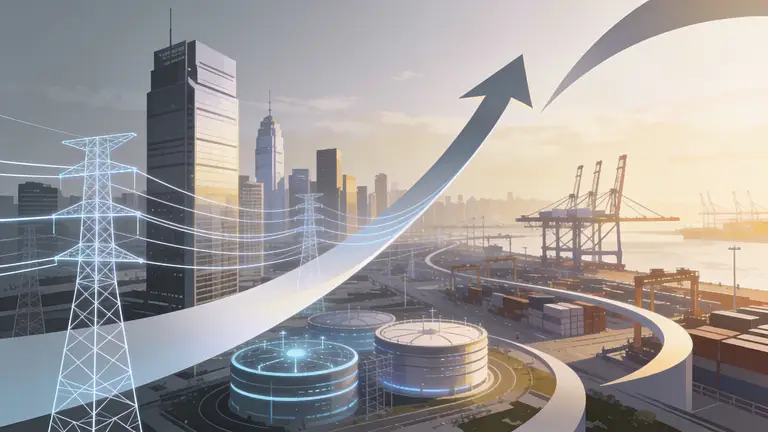
Türkiye’s emergence as a strategic energy investment hub is moving from aspiration to capital deployment. At COP31 in Antalya on November 14, GE Vernova said the country’s location, industrial base and expanding electricity infrastructure were creating long-term opportunities across generation, grids and storage. The assessment matters because Ankara estimates that meeting its 2035 electricity objectives will require $108 billion in generation and transmission investment, much of which must be mobilized from private and international sources.
GE Vernova’s Investment Case for Türkiye
Roger Martella, GE Vernova’s chief corporate affairs and sustainability officer, told Anadolu Agency that Türkiye’s regional interconnections, pipeline networks and manufacturing infrastructure strengthened its potential to become an energy hub linking Europe, the Middle East and the Caspian region.
His argument was based on more than geography. GE Vernova has operated in Türkiye for over 75 years, and its technologies support approximately 34 gigawatts of the country’s installed generating capacity. The company has helped arrange more than $1.8 billion in financing for Turkish energy projects, including over $900 million for solar developments, according to Anadolu Agency.
Martella said Türkiye’s transition should be viewed as an integrated industrial strategy rather than simply an expansion of electricity generation. Renewable capacity, grid investment, financing, domestic manufacturing and workforce development have to advance together. He also emphasized the importance of predictable, long-term and technology-neutral regulation, a point of particular relevance to foreign developers calculating returns over 20 or 30 years.
GE Vernova’s position in the market spans both low-carbon technologies and the flexible conventional generation needed to balance variable renewables. In May 2026, GE Vernova and Turkish contractor ENKA began commercial operation of the 852-megawatt Kırklareli combined-cycle plant near the Bulgarian border. The plant is Türkiye’s first using GE’s HA gas-turbine technology, while a multi-year service agreement gives the company a continuing operational role. GE Vernova said ENKA completed engineering, procurement, construction and commissioning over 36 months, involving approximately eight million person-hours.
The company also has a manufacturing footprint. LM Wind Power, now part of GE Vernova, opened its Bergama blade factory in İzmir province in 2017, representing an investment of about $80 million. Such facilities demonstrate why Türkiye can function as both a project market and a production base serving neighboring regions.
A $108 Billion Expansion Program
Türkiye’s investment proposition is underpinned by a clear capacity gap. The government wants combined wind and solar capacity to reach 120 GW by 2035. Energy and Natural Resources Minister Alparslan Bayraktar has estimated that this will require approximately $80 billion for generation and another $28 billion for transmission.
Türkiye ended 2025 with about 40 GW of wind and solar capacity, according to energy think tank Ember. Reaching 120 GW therefore requires the country to add roughly 80 GW in a decade. Annual installations would need to rise to approximately 8 GW, above the record 6.5 GW commissioned in 2025.
The recent trajectory is nevertheless substantial. Ember’s Türkiye Electricity Review 2026 found that Türkiye added 4.5 GW of solar and a record 1.9 GW of wind during 2025. Solar generation doubled from 18.4 terawatt-hours in 2023 to 37.3 TWh in 2025. Wind and solar together supplied about 22 percent of electricity, surpassing hydropower for the first time.
Renewables as a whole provided 43 percent of Turkish electricity in 2025, according to the International Energy Agency. The national energy plan anticipates this proportion rising to 55 percent by 2035.
Demand provides a strong commercial rationale for additional capacity. The IEA’s 2026 Türkiye Energy Policy Review found that electricity consumption grew by almost 5 percent annually between 2005 and 2024, the highest average rate among IEA member countries. Industrial expansion, household consumption, electric vehicles, cooling, data centers and artificial intelligence infrastructure are expected to sustain growth through 2035.
For international investors, that combination of rising consumption and mandated capacity expansion creates openings in utility-scale wind and solar, distributed generation, batteries, high-voltage equipment, digital grid management and energy services. It also creates competition for the best grid connections, land parcels and licensed projects.
The Grid Is Becoming the Critical Investment Constraint
Generation targets are only credible if Türkiye can transport electricity from resource-rich regions to industrial and urban demand centers. Bayraktar said the transmission network expanded by 80 percent between 2005 and 2025 to reach 77,000 kilometers. Over the same period, the number of transmission substations increased from 512 to 824, while transformer capacity rose by 226 percent to 236,913 megavolt-amperes.
The next phase is more ambitious. Türkiye plans to construct about 9,580 kilometers of high-voltage direct-current corridors with 28 GW of capacity, alongside 15,000 kilometers of new alternating-current lines, according to figures reported by Anadolu Agency.
Multilateral lenders are already supporting the program. In August 2025, the World Bank approved a €625 million loan, a €32.8 million Clean Technology Fund loan and a $2 million grant for the Transforming Power Transmission System Project. World Bank Türkiye director Humberto Lopez said the project would help unlock private investment by expanding the network’s capacity to absorb large-scale wind and solar generation.
In June 2026, the World Bank approved a further €400 million for distributed wind and commercial battery storage. Lopez described storage and distributed wind as the next critical step in future-proofing the grid.
Battery deployment remains at an early stage. The IEA reported that Türkiye had no operating battery-storage capacity as of 2024, although it plans to reach 2.1 GW by 2030 and 7.5 GW by 2035, assuming two-hour systems. A regulatory change allows the Energy Market Regulatory Authority, or EMRA, to grant renewable pre-licenses to companies committing to build corresponding storage facilities. By October 2025, storage-integrated projects totaling 32.9 GW had received pre-licenses, but the gap between approvals, financing and construction remains significant.
This is where project management becomes as important as technology selection. Developers must coordinate grid studies, environmental approvals, land rights, equipment delivery, construction schedules and commissioning requirements. A nominally licensed asset may have limited value if its connection timetable or curtailment exposure is poorly understood.
Industrial Policy, Tenders and Market Access
Türkiye’s Renewable Energy Resource Area, or YEKA, tenders are central to allocating large-scale renewable capacity. The Energy Ministry said it completed YEKA competitions totaling 3.8 GW and approximately $4 billion of investment during 2025. It intends to tender at least 2 GW annually, with offshore wind expected to become a new area after permitting work is completed.
These competitions are more than power auctions. Their conditions can include domestic manufacturing, research, employment and equipment-sourcing obligations. Foreign turbine, component and engineering companies therefore need a market-entry strategy that considers whether to bid directly, form a Turkish joint venture, establish a local subsidiary or supply an experienced domestic developer.
ENERCON’s 2026 decision to establish a rotor-blade factory in Bergama illustrates the industrial logic. The German manufacturer explicitly linked the facility to local-content requirements in Türkiye’s onshore wind tender system. For international suppliers, incorporation and corporate structuring affect bid eligibility, financing, tax treatment, profit repatriation and exposure to project liabilities.
Investment incentives may support manufacturing facilities, research activities and green-transformation projects, but eligibility depends on location, technology, scale and the specific incentive certificate. Investors must distinguish between support for generation, storage, equipment production and industrial decarbonization. Incentive mapping should therefore occur before a site or corporate structure becomes fixed, not after construction commitments are made.
Import-export facilitation is equally material. Turbines, inverters, battery cells and high-voltage equipment may involve customs classification, product certification and technical-standard requirements, while domestic-content rules can alter procurement economics. Türkiye’s location and customs relationship with Europe can support regional exports, but it does not eliminate sector-specific compliance work.
Climate Policy Adds Opportunity and Regulatory Risk
Türkiye’s first Climate Law entered into force in July 2025. Law No. 7552 established the legal foundation for a national emissions-trading system, carbon-market infrastructure and a Turkish green taxonomy. The legislation also recognizes embedded emissions and border-carbon mechanisms, concepts that directly affect manufacturers exporting carbon-intensive products to Europe.
For renewable generators and clean-technology producers, carbon pricing could strengthen demand for low-emission electricity and corporate power-purchase agreements. For gas, coal and energy-intensive industrial projects, it introduces a new variable into long-term cash-flow forecasts. The details of allowance allocation, emissions monitoring and market implementation will determine the actual cost.
Türkiye’s transition also contains a significant contradiction. Ember calculated that coal still supplied 34 percent of electricity in 2025, compared with 22 percent from wind and solar. The IEA warned that Türkiye’s power-sector carbon intensity remains among the highest in its membership and that continuing coal support could increase fiscal and carbon-pricing risks.
Foreign investors should consequently treat headline capacity targets as one part of the due-diligence picture. Revenue mechanisms, currency exposure, power-market settlement, grid access, environmental authorization, carbon regulation and possible changes to support schemes all affect bankability. Government relations and regulatory liaison are particularly relevant where several institutions, including the Energy Ministry, EMRA, TEİAŞ, municipalities and environmental authorities, have overlapping roles.
What This Means for Foreign Investors
GE Vernova’s assessment is credible because Türkiye combines a growing power market, manufacturing capability, regional connectivity and a large government-backed investment pipeline. The 120 GW target, grid-expansion program and emerging storage market create opportunities well beyond electricity generation, including components, software, engineering, maintenance, financing and industrial energy services.
The opportunity is not automatically investable, however. A foreign entrant first needs market-entry analysis that distinguishes competitive segments from areas constrained by licenses or grid capacity. It then needs an appropriate incorporation and corporate structure for bidding, financing, local partnerships and tax efficiency. Project-level work requires verification of land, permits, connection rights, tender obligations and environmental exposure.
Investment-incentive analysis should be completed early enough to influence technology, location and procurement decisions. Legal and tax compliance must account for electricity-market rules, the new climate framework, transfer pricing, customs and potential carbon costs. Import-export support matters for equipment certification and local-content planning, while government relations can help an investor understand policy implementation without substituting for formal approvals.
Finally, on-the-ground project management is necessary to convert an awarded license or tender into an operating asset. Türkiye’s energy transition is large enough to support international capital, but its next phase will reward investors that integrate regulation, financing, supply chains and execution from the outset.
Related insights
FDI Consultancy
Ask about this topic
Tell us about your plans in Türkiye. The topic is filled in from this article, and you can edit it. We use these details only to reply. Read the privacy policy.
Message sent
Thank you for reaching out. We will get back to you as soon as possible.